The Potato Eaters
Vincent van Gogh (1853 - 1890), Nuenen, April-May 1885 oil on canvas, 82 cm x 114 cm Credits (obliged to state): Van Gogh Museum, Amsterdam (Vincent van Gogh Foundation) F-number F0082 JH-number JH0764 Object number s0005V1962 Dimensions 82 cm x 114 cm, 100 cm x 133 cm Provenance Sent by the artist to his brother Theo van Gogh, Paris, at the beginning of May 1885; after his death on 25 January 1891, inherited by his widow, Jo van Gogh-Bonger, and their son, Vincent Willem van Gogh, Paris; administered until her death on 2 September 1925 by Jo van Gogh-Bonger, Bussum/Amsterdam/Laren; transferred by Vincent Willem van Gogh, Laren, to the Vincent van Gogh Foundation, Amsterdam, 10 July 1962; agreement concluded between the Vincent van Gogh Foundation and the State of the Netherlands, in which the preservation and management of the collection, and its placing in the Rijksmuseum Vincent van Gogh, to be realized in Amsterdam, is entrusted to the State, 21 July 1962; given on loan until the opening of the museum on 2 June 1973 to the Stedelijk Museum, Amsterdam; on permanent loan to the Rijksmuseum Vincent van Gogh from 2 June 1973 and at the Van Gogh Museum, Amsterdam, since 1 July 1994.
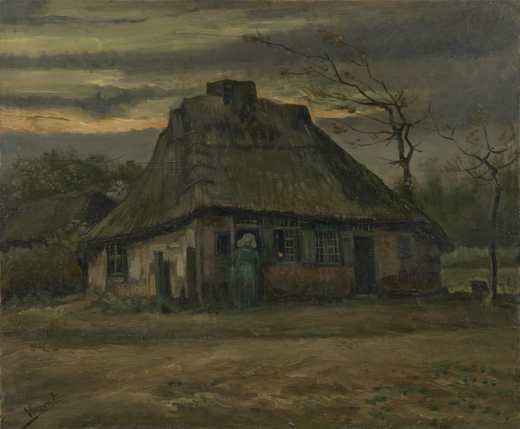
The Cottage
Vincent van Gogh (1853 - 1890), Nuenen, May 1885 oil on canvas, 65.7 cm x 79.3 cm Credits (obliged to state): Van Gogh Museum, Amsterdam (Vincent van Gogh Foundation) The old cottage beneath the red evening sky presents an idyllic picture of rural life. Van Gogh called these humble farmhouses 'people's nests'. He felt they had a sheltering quality. This cottage contains two houses with two front doors and a shared chimney. That type of dwelling was then on the brink of disappearing. 'The thing struck me greatly; those two cottages, half decayed under one and the same thatched roof, reminded me of a couple of worn-out old folk who make up just one single being and whom one sees supporting each other,' he wrote. The subject continued to fascinate him. Four years later, in France, he returned to drawing and painting old houses. Over the years, however, his style of painting had changed significantly: by that time, he used bright colours and loose brushwork. F-number F0083 JH-number JH0777 Object number s0087V1962 Dimensions 65.7 cm x 79.3 cm, 86.2 cm x 99.2 cm, 5.2 cm Provenance Sent by the artist from Nuenen to his brother Theo van Gogh, Paris, at the beginning of June 1885; after his death on 25 January 1891, inherited by his widow, Jo van Gogh-Bonger, and their son, Vincent Willem van Gogh, Paris; administered until her death on 2 September 1925 by Jo van Gogh-Bonger, Bussum/Amsterdam/Laren; given on loan by Jo van Gogh-Bonger to the Rijksmuseum, Amsterdam, from 1917 to 1919; given on loan from Vincent Willem van Gogh, Laren, to the Stedelijk Museum, Amsterdam, since 16 December 1930; transferred by Vincent Willem van Gogh, Laren, to the Vincent van Gogh Foundation, Amsterdam, 10 July 1962; agreement concluded between the Vincent van Gogh Foundation and the State of the Netherlands, in which the preservation and management of the collection, and its placing in the Rijksmuseum Vincent van Gogh, to be realized in Amsterdam, is entrusted to the State, 21 July 1962; given on loan until the opening of the museum on 2 June 1973 to the Stedelijk Museum, Amsterdam; on permanent loan to the Rijksmuseum Vincent van Gogh from 2 June 1973 and at the Van Gogh Museum, Amsterdam, since 1 July 1994.
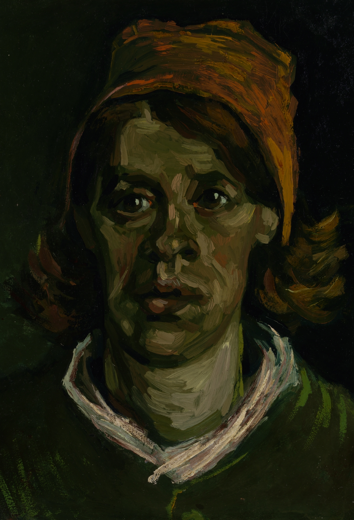
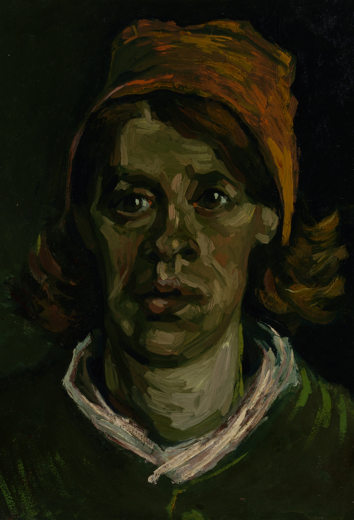
Head of a Woman
Vincent van Gogh (1853 - 1890), Nuenen, April 1885 oil on canvas, 43.2 cm x 30 cm x 2.2 cm Credits (obliged to state): Van Gogh Museum, Amsterdam (Vincent van Gogh Foundation) This woman is Gordina de Groot, who posed with her family for The Potato Eaters. To prepare for that painting, Van Gogh made over 40 studies of farmworkers' heads, including this one. He hoped this would make him a better figure painter. Van Gogh wanted to portray peasants as people of a special kind, who had been working the land for centuries. 'They remind one of the earth, sometimes appear to have been modelled out of it,' Vincent wrote to his brother Theo. This work was a study in colour. Van Gogh concentrated on the complementary colours red and green.